

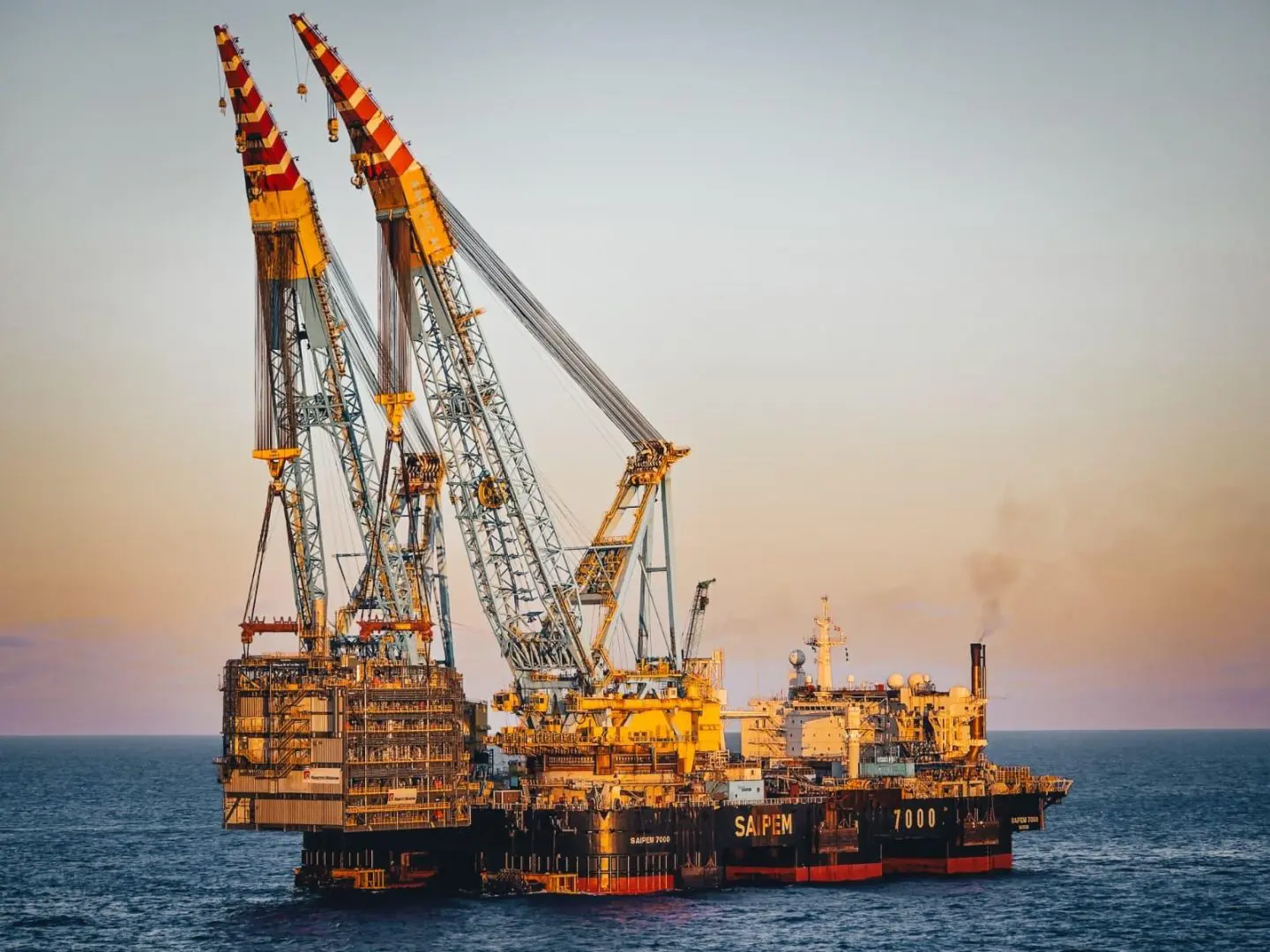
SAN DONATO MILANESE (ITALPRESS) – Saipem has successfully completed the lifting operations of the gas recovery module for the Bouri Gas Utilization Project (BGUP), offshore Libya, using its flagship Saipem 7000, one of the largest crane vessels in the world.
The module, built on behalf of Saipem, EPCI main contractor for the Bouri project, by Rosetti Marino at the Marina di Ravenna shipyard, represents a key component of the system. In early May, the module left the shipyard to be transported to the Bouri field, located approximately 170 kilometers off the Libyan coast.
Weighing more than 5,200 tons, with plan dimensions of 45 meters by 31 meters and a height of approximately 45 meters, the module, built in approximately two years, integrates advanced gas treatment systems and was installed on the existing offshore platform of the Bouri field, contributing to the construction of the new infrastructure envisaged by the project.
“The lifting of the module,” a statement reads, “represents a significant milestone in the project’s execution phase, confirming Saipem’s ability to manage complex operations with advanced engineering planning and the use of heavy-lift solutions, while adhering to the highest safety and reliability standards.”
Following completion of the lifting operations, the offshore activities envisaged in Saipem’s scope of work, executed by Rosetti Marino, will continue. These activities include the integration of the module onto the existing DP4 platform, as well as the hook-up and commissioning of the system and its communication, safety, and control systems. Furthermore, the pre-commissioning of approximately 28 kilometers of subsea pipelines, already laid, is planned. These pipelines will connect the DP3, DP4, and Sabratha platforms and will allow the transportation of recovered gas to the Mellitah treatment complex.
The Bouri Gas Utilization Project, developed by Mellitah Oil & Gas (a joint venture between Eni and NOC), aims to recover associated gas currently subject to flaring—the controlled combustion of excess gas that produces the typical visible flame in refineries or wells—and channel it to the Mellitah complex for use or export. Reducing flaring will prevent gas from being burned into the atmosphere, significantly contributing to the reduction of CO2 emissions (1.5 Mt eq/year reduction). Furthermore, the initiative will increase net gas production to approximately 2 million cubic meters per day, improving the efficiency of existing infrastructure.
– photo Saipem –
(ITALPRESS).