Rocket Lab completa test ambientali per missione Loxsat
- Cape Canaveral, USA -20220413-
VIDEO AVAILABLE: CONTACT [email protected]
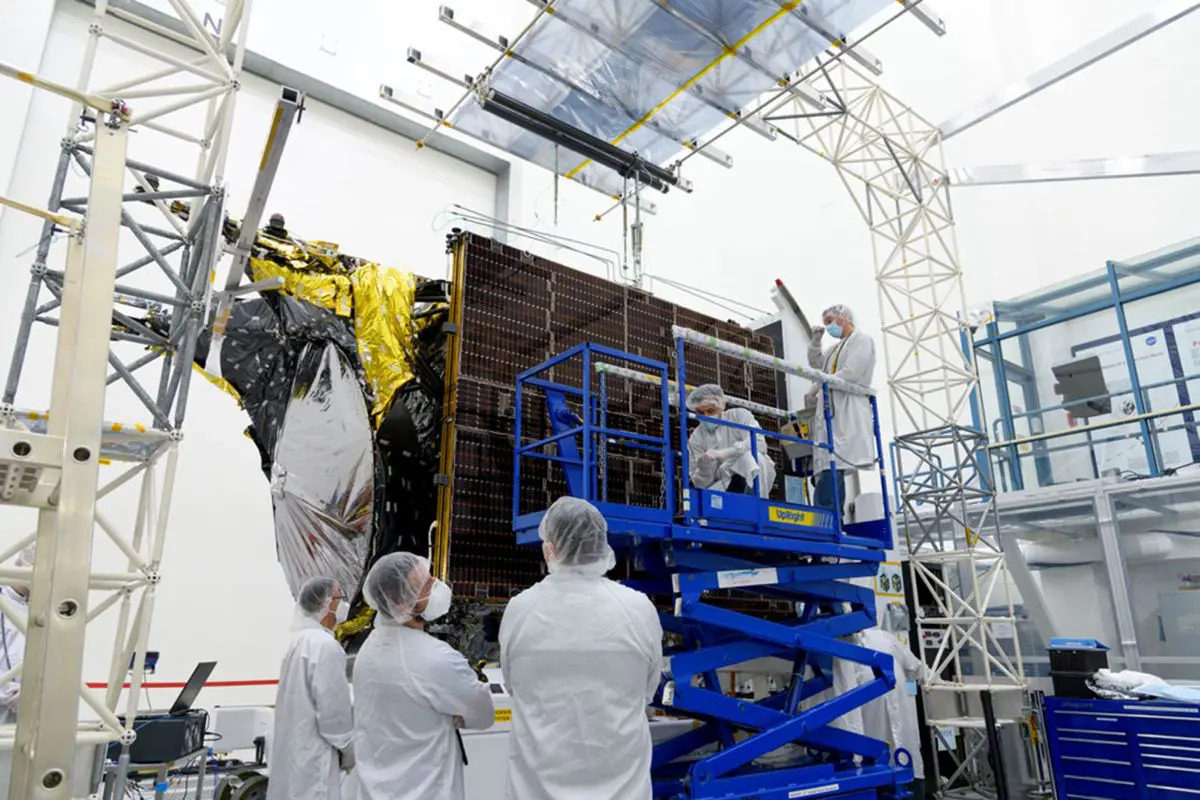
Engineers are putting the final touches on NASAs Psyche spacecraft, which is set to launch from Cape Canaveral, Florida, in August on its journey to a metal-rich asteroid of the same name. Members of the media got a chance to see the spacecraft up close in a clean room at the agencys Jet Propulsion Laboratory on Monday, April 11. Reporters also interviewed mission leaders, including Psyches principal investigator, Lindy Elkins-Tanton from Arizona State University, and its project manager, Henry Stone from JPL.
To prevent the van-size spacecraft from bringing Earth bacteria into space, reporters wiped down their equipment with isopropyl alcohol and donned protective smocks and hair coverings before entering the High Bay 2 clean room in the Labs storied Spacecraft Assembly Facility. NASA is set to ship Psyche to the agencys Kennedy Space Center in Florida for launch this summer.
The spacecraft will fly by Mars for a gravity assist in May 2023 and, in early 2026, orbit around asteroid Psyche in the main asteroid belt between Mars and Jupiter. Scientists think the asteroid, which is about 173 miles (280 kilometers) at its widest point, may consist largely of metal from the core of a planetesimal, one of the building blocks of the rocky planets in our solar system: Mercury, Venus, Earth, and Mars. If so, it could provide a unique opportunity to study how planets like our own Earth formed.
The mission has been in the phase known as assembly, test, and launch operations since March 2021. Optimal launch periods to the main asteroid belt are limited, so over the last year, the team has worked against the clock to complete assembly. They recently attached the largest solar arrays ever installed at JPL and have put the spacecraft through a series of rigorous tests to simulate the extreme conditions that a NASA spacecraft endures. After undergoing electromagnetic, thermal-vacuum, vibration, shock, and acoustic testing, Psyche has been cleared to proceed. The launch period opens 1 August.
-PICTURED: General View (NASA Unveil Psyche Spacecraft Ahead Of Trip To Metal Rich Asteroid)
-PHOTO by: NASA/JPL-Caltech/Cover Images/INSTARimages.com
-51408856.jpg
This is an editorial, rights-managed image. Please contact Instar Images LLC for licensing fee and rights information at [email protected] or call +1 212 414 0207 This image may not be published in any way that is, or might be deemed to be, defamatory, libelous, pornographic, or obscene. Please consult our sales department for any clarification needed prior to publication and use. Instar Images LLC reserves the right to pursue unauthorized users of this material. If you are in violation of our intellectual property rights or copyright you may be liable for damages, loss of income, any profits you derive from the unauthorized use of this material and, where appropriate, the cost of collection and/or any statutory damages awarded
ROMA (ITALPRESS/ECONOMIA DELLO SPAZIO) – Rocket Lab ha completato con successo i test ambientali del veicolo destinato alla missione LOXSAT, sviluppata per NASA in collaborazione con Eta Space. Il sistema ha superato prove critiche, tra cui test in vuoto e vibrazione, validando la capacità di operare nelle condizioni estreme del lancio e dello spazio. Si tratta di una fase chiave nella preparazione della missione, in cui le simulazioni progettuali vengono confrontate con condizioni reali. Il superamento dei test ambientali rappresenta uno dei passaggi più rilevanti prima dell’integrazione finale e del lancio.
Il tema, però, va oltre la singola missione. LOXSAT si inserisce in un’area tecnologica emergente: la gestione e lo stoccaggio di propellenti criogenici nello spazio. In particolare, il progetto punta a dimostrare la fattibilità dello stoccaggio di ossigeno liquido in orbita, un elemento fondamentale per abilitare operazioni più complesse come il rifornimento in orbita e le missioni di lunga durata. Qui si gioca una partita strategica. La capacità di gestire propellenti nello spazio rappresenta uno dei principali colli di bottiglia per l’economia cislunare.
Senza soluzioni affidabili di stoccaggio e trasferimento, l’espansione delle missioni oltre l’orbita terrestre resta limitata. Il punto centrale è l’operatività. Non basta dimostrare che una tecnologia funziona in laboratorio: è necessario validarla in condizioni reali, con sistemi che possano essere integrati in architetture più ampie. È in questa fase che molte innovazioni incontrano le principali criticità. In questo contesto, il ruolo di Rocket Lab evidenzia un modello sempre più diffuso: aziende in grado di offrire soluzioni integrate, combinando sviluppo del veicolo, gestione della missione e servizi di lancio. Un approccio che riduce la complessità per il cliente e accelera i tempi di implementazione.
C’è poi un aspetto più ampio. Tecnologie come quelle testate con LOXSAT sono abilitanti per una nuova fase dell’economia spaziale, in cui la logistica — trasporto, rifornimento, gestione delle risorse — diventa centrale quanto l’hardware. Resta una domanda aperta. Queste soluzioni riusciranno a raggiungere rapidamente un livello di maturità sufficiente per supportare missioni operative, o richiederanno ancora lunghi cicli di sviluppo?
Il completamento dei test ambientali rappresenta un passo concreto, ma non definitivo. È il momento in cui la tecnologia inizia a confrontarsi con la realtà operativa. Ed è proprio su questo passaggio — dalla validazione alla scalabilità — che si giocherà il futuro delle infrastrutture spaziali avanzate.
– Foto IPA Agency –
(ITALPRESS).
Vuoi pubblicare i contenuti di Italpress.com sul tuo sito web o vuoi promuovere la tua attività sul nostro sito e su quelli delle testate nostre partner? Contattaci all'indirizzo [email protected]