


RABAT (MOROCCO) (ITALPRESS/MNA) – The failure to renew the mandate of MINURSO, the United Nations mission in Western Sahara, marks a turning point in the management of the regional dispute and opens a new diplomatic phase, characterised by moving beyond previous mechanisms and consolidating the autonomy plan under Moroccan sovereignty as the basis for a political solution.
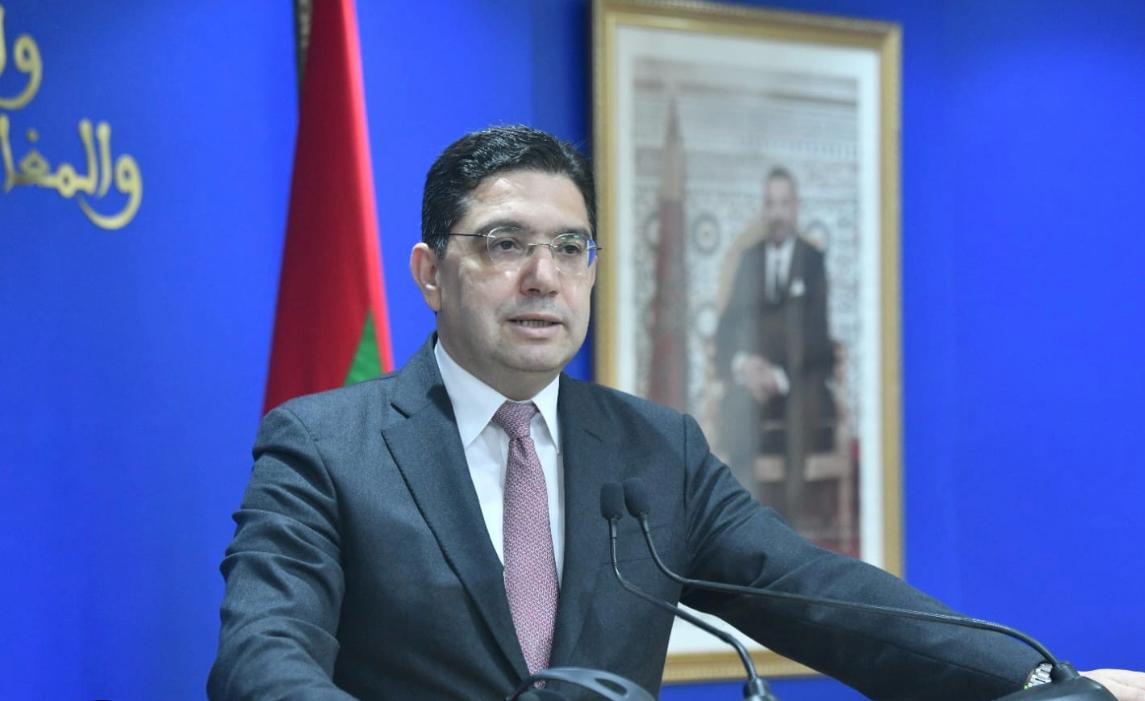
This was stated by Moroccan Foreign Minister Nasser Bourita during a special programme broadcast on Saturday evening by television channel 2M, following Russia’s veto which prevented the adoption of a resolution submitted by the United States to the UN Security Council.
According to Bourita, Moscow’s veto did not come as a surprise to Rabat, which had anticipated this possibility and chosen not to weaken the American proposal through compromises that would have perpetuated the status quo. Morocco, he explained, preferred to turn the situation into an opportunity to change the rules that have governed the handling of the Western Sahara issue over recent decades.
The minister stressed that the US proposal received the support of eleven members of the Security Council, including three permanent members, confirming, in his view, the irreversible nature of the international momentum in favour of Morocco’s autonomy initiative. Bourita recalled that the direction outlined by King Mohammed VI is to move beyond simply managing the dispute and bring about a substantial change in the parameters of the political process.
From this perspective, the new resolution was intended to definitively clarify the basis for negotiations, their objectives, the parties involved and the humanitarian situation in the Tindouf camps, building on Resolution 2797 of 2025.
The head of Moroccan diplomacy attributed responsibility for the termination of MINURSO’s mandate to Russia, noting that the failure to renew it was a direct consequence of Moscow’s veto. He also recalled that the United States had, in turn, blocked Russia’s proposal for a simple technical extension of the mission, which was considered incompatible with the new political momentum.
On the operational front, Bourita announced that MINURSO’s presence in the Kingdom’s southern provinces would have to come to an end, with the gradual withdrawal of its personnel, vehicles, equipment and United Nations insignia.
The process will be coordinated with the UN Secretary-General’s office and the Department of Peace Operations. The minister assured that Morocco would guarantee an orderly and exemplary withdrawal, providing the necessary time and resources and stressing that the operation should not be regarded as an expulsion of the mission.
Bourita highlighted that the disappearance of MINURSO’s physical presence and the periodic procedures associated with renewing its mandate represent a significant change, both politically and symbolically. According to the minister, two of the main factors contributing to the internationalisation of the Western Sahara issue are being removed: the mission’s presence on the ground and the periodic Security Council meetings to renew its mandate and examine its reports.
However, the end of MINURSO does not mean, he clarified, that Morocco is abandoning the ceasefire. Rabat remains fully committed to respecting the agreement of 6 September 1991, which is regarded as a separate political and legal commitment from the international mechanism tasked with monitoring it.
The minister also reaffirmed the strength of the Kingdom’s relations with the United Nations, emphasising that the non-renewal of the mission does not rule out the continuation of diplomatic efforts to achieve a political solution, potentially through new initiatives and negotiating arrangements.
Regarding the future of the process, Bourita reiterated that the autonomy plan presented by Morocco in 2007 remains the Kingdom’s definitive proposal and the central reference point for resolving the dispute. However, he explained that the resumption of negotiations will require a clear redefinition of the parameters and the parties involved, in line with the new political and diplomatic reality.
According to Bourita, the non-renewal of MINURSO’s mandate therefore does not represent a step backwards, but rather an acceleration of the process towards finally resolving a dispute that has lasted for almost fifty years.
– Photo: Moroccan Ministry of Foreign Affairs –
(ITALPRESS)