


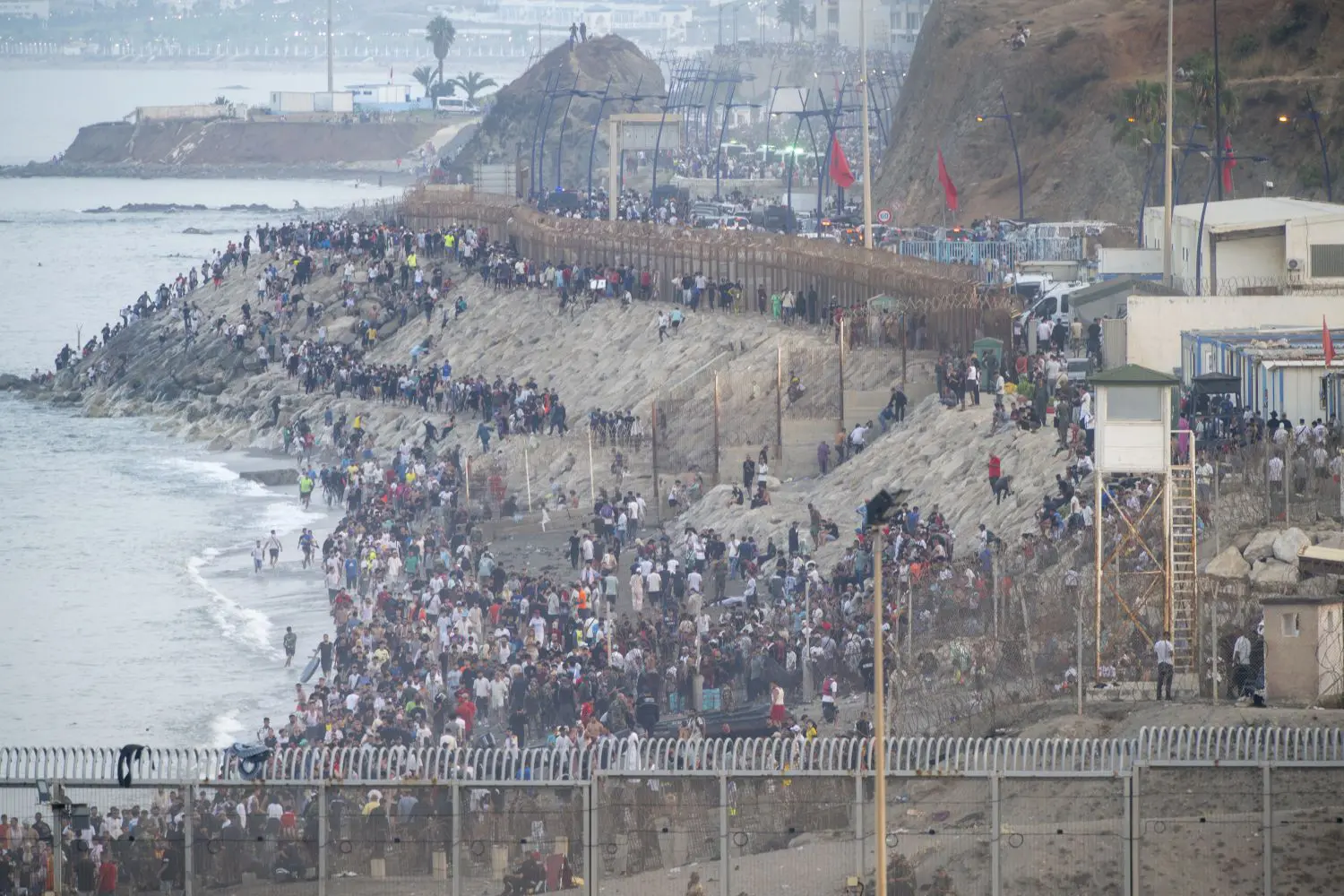
RABAT (MOROCCO) (ITALPRESS) – The management of migration flows is a shared responsibility among countries of origin, transit and destination, and no single State can be expected to address a transnational challenge on its own. This was stated by a Moroccan government source, as quoted by the state news agency MAP, which reiterated that international cooperation is the only effective response to the new dynamics of migration.
According to the source, the Kingdom of Morocco “has always fully assumed its responsibilities” in managing irregular migration, investing “substantial resources” in terms of personnel, logistics and financing to control migration flows and combat criminal networks involved in migrant smuggling. This commitment, the source stressed, has made “a decisive contribution” to the shared security of the Western Mediterranean and Europe.
The Moroccan government source, quoted by MAP, highlighted Morocco’s results: around 160,000 attempted irregular crossings have been prevented over the past two years, including 79,000 in 2024 and 74,000 in 2025. During the same period, 632 criminal networks specializing in migrant smuggling were dismantled and more than 32,000 search-and-rescue operations at sea were carried out. Over the past five years, the source added, Moroccan authorities have prevented more than 360,000 irregular departures through the extensive deployment of human, technological and financial resources.
The Moroccan government source told MAP that “cooperation with Spain is one of the main factors” that has enabled the Western Mediterranean migration route to remain under control. Furthermore, the source said that the return to Morocco of all those who had crossed the Ceuta border crossing constitutes “further proof of the excellent level of cooperation between Rabat and Madrid.” According to the source, the operation, carried out in full coordination with the Spanish authorities, confirms “the effectiveness of bilateral cooperation mechanisms and the ability of the two countries to manage exceptional situations swiftly and responsibly.”
The Moroccan government source said the episode demonstrates that “mutual trust and operational coordination are the key” to successfully addressing common migration challenges, well beyond temporary political controversies.
The source further told MAP that the current migration management model now shows “clear limitations” in light of the profound changes that have taken place in recent years. The evolution of migration routes, growing instability across several parts of Africa, the increasingly structured role of transnational criminal organizations and the rise of disinformation campaigns on social media require, according to the source, “a comprehensive rethink of cooperation tools.”
According to the Moroccan government source, “it is necessary to develop a new model based on genuine shared responsibility” among all stakeholders, avoiding unilateral approaches that risk undermining the efforts made so far. Migration policy, the source continued, should be based “on partnership, mutual trust and respect for the commitments undertaken” by each partner.
The Moroccan government source also referred to a recent decision by the Spanish judiciary, observing that “it is not possible to dismantle the system for combating illegal immigration and then ask Morocco to bear the consequences.” Such an approach, the source argued, would risk “weakening the mechanisms of operational cooperation” developed over the years between Rabat and Madrid in the fight against migrant smuggling networks.
The Moroccan government source also referred to what it described as “election-driven statements,” arguing that migration should not be used as a domestic political tool. According to the source, as quoted by MAP, fueling controversy or adopting decisions driven by electoral considerations risks “undermining a cooperation” that has delivered tangible results over the years for the security of both shores of the Mediterranean.
The Moroccan government source therefore called for “preserving the spirit of trust and partnership” that has always characterized cooperation with Spain and the European Union. According to the source, security is “a shared interest” requiring the maintenance of effective operational tools and constant coordination among the countries concerned.
Migration cooperation, the source continued, cannot be conceived as a unilateral transfer of responsibilities to Morocco but must remain a balanced partnership in which each party assumes its share of responsibility.
Finally, the Moroccan government source reaffirmed that the Kingdom will continue to fulfill its obligations with the same sense of responsibility that has always guided its actions, confirming its commitment to a humane, solidarity-based and secure management of migration, in full respect of human rights and international obligations.
The source, as quoted by MAP, also renewed its call on European partners to adapt the framework of cooperation to new migration realities by prioritizing a comprehensive, sustainable approach based on shared responsibility.
– Photo Ipa Agency –
(ITALPRESS).