

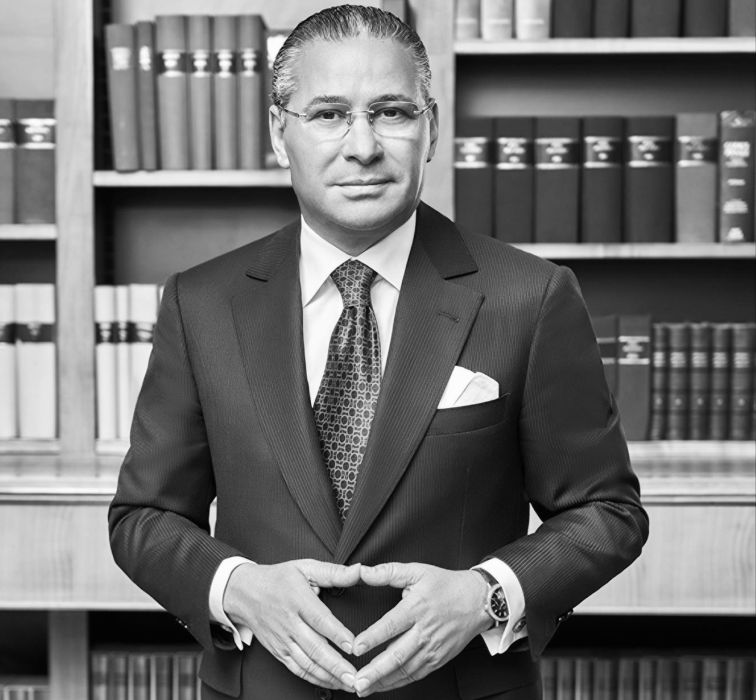
ROME (ITALPRESS/MNA) – Access to energy should not be a privilege reserved for certain nations or regions, but a fundamental human condition that underpins health, education, security, and opportunity. This is the message delivered by Kamel Ghribi, President of GKSD and the San Donato Group, in a recent article on energychamber.org. He highlights that millions of households, schools, clinics, and small businesses worldwide still lack reliable, affordable electricity. According to the United Nations, at least 600 million people in Africa alone are without electricity, directly affecting quality of life, education, and economic prospects.
“Access to energy should not be a privilege of some nations or regions. It is a fundamental human condition that supports health, education, security, and opportunity,” Ghribi stressed. He explained that for affected families, this reality means dark nights, limited ability to refrigerate medicines and food, interrupted schooling, and blocked economic opportunities. He described it as “a true global human problem that impacts livelihoods, life expectancy, and economic resilience.”
Ghribi noted that although energy inequality is often discussed in technical or political contexts, it continues to generate little coordinated action. “If we are serious about global development and resilience, we must move the conversation from theory to action,” he said, emphasising that energy access is essential for the functioning of hospitals, water systems, factories, transport networks, and communication technologies.
The lack of reliable energy, he continued, widens social and economic divides and can destabilise communities. “Regions without reliable energy struggle to attract investment, develop local industries, or maintain essential services, fueling economic hardship, unemployment, migration pressures, and social frustration,” he warned.
For the GKSD president, energy inequality is not only a local development issue but a global risk factor. “Energy inequality is not just a development matter for those directly affected; it becomes a multiplier of global risks,” he said, cautioning that countries that ignore energy access contribute to a world more vulnerable to economic fragmentation and financial shocks.
Ghribi called for results-driven leadership beyond mere rhetoric. Quoting Canadian Prime Minister Mark Carney at the 2026 World Economic Forum, he said, “We know the old order will not return. We should not mourn it. Nostalgia is not a strategy… The powerful have their power. But we also have something – the ability to stop pretending, to name reality, to build our strength at home, and to act together.”
To address energy inequality, Ghribi stressed the need to align capital and technical expertise, navigate local regulations, and design sustainable, resilient infrastructure. “Solving energy inequality requires operational leadership: aligning capital and technical know-how, managing local regulations and community dynamics, and designing infrastructure that is both sustainable and resilient,” he said.
As a concrete example, Ghribi cited his company’s proposal to build two waste-to-energy plants in Benghazi, Libya, converting urban waste into electricity. “By turning waste into energy, we can simultaneously address two urgent local needs: reducing pollution and increasing the availability of reliable electricity,” he explained, calling the initiative a model of integrated problem-solving and cooperation between technical expertise, investment, and operational planning.
Ghribi concluded that closing the energy gap will require partnerships between governments, investors, and local communities, sustainable financing models, and technical solutions tailored to local conditions. “Reducing energy inequality will not happen through statements or conferences,” he said, reiterating that energy access should be viewed not as a privilege but as a fundamental human condition essential for global development and stability.
Photo: GKSD
(ITALPRESS).